 By Maria Camacho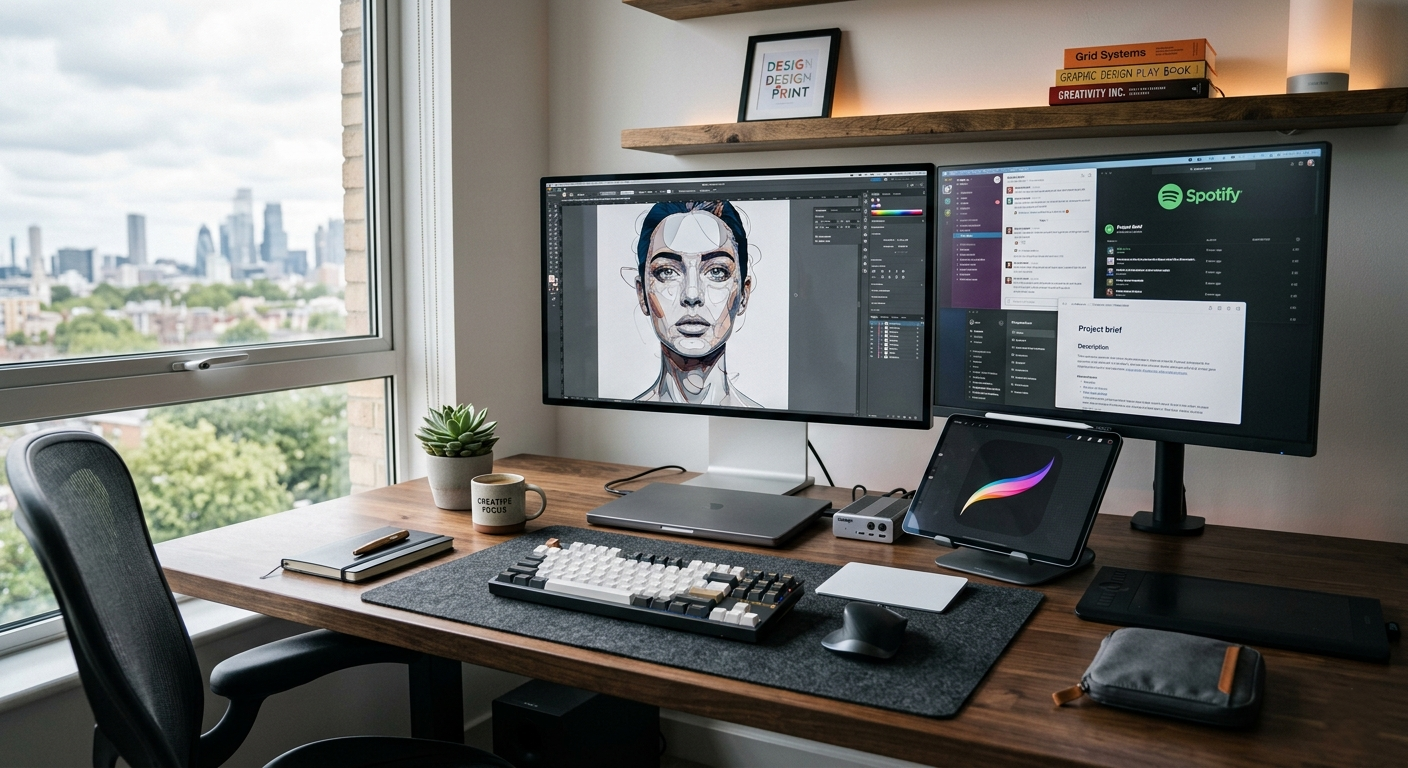
The creative landscape of 2026 demands more than just a surface to hold a laptop. As the lines between digital and physical workspaces blur, your desk has evolved from a piece of furniture into a cognitive tool. In an era of constant notifications and AI-driven workflows, a “maximum focus” setup is designed to reduce friction, eliminate sensory clutter, and trigger “flow state” the moment you sit down.
1. The Foundation: Ergonomics Meets Movement
In 2026, the “static” desk is a thing of the past. Professional creatives now prioritize setups that adapt to their physiological needs throughout the day.
- Adaptive Standing Desks: Look for desks with programmable height presets. Switching between sitting and standing every 60 minutes prevents physical fatigue and keeps the brain “alert.”
- The 20-20-20 Monitoring: Position your primary OLED or Paper-white display at eye level to prevent neck strain. High-resolution screens with built-in blue light filtration are essential for those long-form design or coding sessions.
- Active Seating: Whether it’s a high-performance ergonomic chair or a curated stool that encourages micro-movements, your base must support your spine while allowing for the natural shifts of a creative body at work.
2. Sensory Curation: The “Phygital” Balance
A focused mind requires a controlled environment. Modern setups leverage both physical and digital (phygital) elements to keep distractions at bay.
- Acoustic Management: Noise-canceling headphones are a staple, but “Sound Zones” created by directional speakers or desktop acoustic panels are the 2026 trend. These create a literal bubble of sound that signals to your brain: It’s time to create.
- Tactile Tools: Despite the digital shift, physical interaction remains vital. A high-quality mechanical keyboard with specific tactile feedback or a dedicated “Shortcut Deck” (like a Stream Deck) allows you to execute complex creative macros without breaking visual focus.
- Minimalist Lighting: Use smart lighting that syncs with your circadian rhythm. Cool, bright light for deep-focus morning work, and warm, dimmed tones for evening conceptualization and brainstorming.
3. The “Minimalist-Maximalist” Approach
A clean desk isn’t necessarily an empty one; it’s a desk where every item has a functional purpose.
- Cable Management 3.0: In 2026, visible cables are considered “visual noise.” Integrated wireless charging surfaces and under-desk cable trays are non-negotiable for a clear mental space.
- Biophilic Design: Integrating natural elements—such as a small plant or a desktop water feature—has been scientifically proven to reduce cortisol levels. A touch of nature balances the high-tech nature of the creative professional’s tools.
- The “Analog Zone”: Dedicate a small corner of your desk to a high-quality paper sketchbook or a digital e-ink tablet. Moving away from the main glowing screen for a few minutes to sketch an idea by hand can unblock creative ruts.
4. Smart Integration: The AI Co-Pilot Hub
Your 2026 workspace must accommodate the hardware that powers your AI-assisted creative process.
- Dedicated Processing Power: Whether it’s an external GPU or a specialized AI accelerator, your setup should handle real-time rendering and generative tasks without lag. Friction is the enemy of focus.
- Voice-Activated Environmental Controls: Control your lighting, temperature, and “Deep Work” timers via voice commands. This allows you to stay in the zone without having to navigate away from your creative software.
- Status Indicators: Many creatives now use “On Air” or focus-light indicators synced to their calendar, signaling to household members or office colleagues that they are in a deep focus session.
5. Professional Maintenance of the Flow State
Building the setup is only half the battle; maintaining the environment is what ensures long-term productivity.
- The “End-of-Day” Reset: Spend 5 minutes every evening clearing your desk of coffee cups and notes. Starting the next morning with a “Tabula Rasa” (clean slate) is the most effective way to jumpstart focus.
- Digital Hygiene: Keep your desktop icons hidden and use a minimalist wallpaper. Just as physical clutter distracts the eye, digital clutter distracts the mind.
Resources
To further refine your creative environment, explore these essential hubs for workspace optimization:
- The Desk Setup Subreddit & SetupTour: For real-world inspiration and community-voted hardware reviews.
- Ergonos Guide to Workspace Health: A comprehensive resource on the medical science behind desk heights and monitor placement.
- Focus@Will: A neuro-science based music service designed specifically to induce flow states in high-performance creators.
- Minimalist Desk Academy: Digital courses and guides on how to declutter both your physical and digital workspaces for peak output.
 admin
admin